Sigma 200mm f/2 | Shutter & Snap Photography
Photography has always held this magical ability to turn everyday moments into emotional time capsules. I’ve spent roughly two decades behind a camera — teaching workshops, mentoring beginners, obsessing over lenses, and chasing buttery backgrounds like a man possessed. And in that time, I’ve learned something important: give two photographers the same camera, the same lens, the same subject… and you’ll still end up with totally different images. That’s the romance of photography. It reflects who you are. And who I am… is someone who loves a challenge.
While many photographers in my early days gravitated toward convenient focal lengths and zoom lenses that “do it all,” I was the stubborn one walking around with a prime lens glued to my camera like a loyal pet. My first serious lens — the one that shaped my style, my confidence, and honestly my identity as a photographer — was the Canon 135mm f/2L. That lens was my everything. It taught me bokeh. It taught me composition. It taught me distance and compression. For almost two straight years, I shot exclusively with that 135mm. Portrait sessions. Models. Creative shoots. Off-camera flash experiments that now make me cringe but helped me grow. I couldn’t get enough of the way it melted backgrounds into watercolor paintings.
So when Sigma announced the 200mm f/2 DG DN OS — the first mirrorless native lens of its kind — my interest wasn’t casual. It was personal. A lens like this doesn’t come around often. It’s a rare combination: a very long focal length paired with a very bright aperture. It’s a recipe that creates what Matt Johnson famously calls a “stupid amount of bokeh.” This is a lens that makes backgrounds disappear, turns lights into dreamlike orbs, and compresses the world into an intimate stage where your subject becomes the undeniable star.
But hype doesn't always equal reality. So in this review equal parts hands-on testing, storytelling, and professional insight. I want to answer the question photographers everywhere are asking:
Spoiler: it’s fire. But let’s take it from the top.

Build Quality: A Tank Wrapped In Elegance
I need to be upfront about my perspective, because it influences how I evaluate gear. I am not a full-time photographer but I do run a photography business, shoot paid sessions, and rely on my gear in real-world, sometimes chaotic environments. I’ve had to work fast at events, direct families in less-than-ideal lighting, shoot corporate headshots on tight schedules, and capture moving kids during golden hour while parents pray they don’t run into the street.
So when I say I’ve tested this lens, I don’t mean I took it to a park once. I mean I’ve had it with me for five weeks on actual client jobs — weddings, portraits, creative sessions, and even some video work.
And let me say this loud and clear: The Sigma 200mm f/2 is built like a tank, dressed as a luxury car
At roughly 1800 grams (about 4 lbs), it’s no lightweight. It’s slightly heavier than a classic DSLR-era 70-200mm f/2.8. But honestly? The weight feels purposeful. Like every gram is doing something important.
The lens hood alone deserves its own round of applause. It screws on securely and features a rubberized front edge — a touch that tells you Sigma expects you to place this lens face-down, mounted on a camera, without fear. That rubber bumper shows that the engineers know photographers need to work quickly and sometimes roughly in the real world.
I’m convinced that if I were ever stuck in a dark parking lot with nothing but this lens, I’d walk out safe — and the lens would probably still work afterward. (Half joke, half serious.)
Buttons & Stabilization:
Three customizable buttons
An excellent focusing ring
A surprisingly compact profile for what it is
6.5 stops of optical image stabilization
That stabilization deserves praise. A bright 200mm prime is notoriously hard to hold steady, but Sigma makes it as painless as possible. More on that later. This lens was clearly designed for working photographers — the ones who walk miles, lean into weird angles, crouch in dirt, and need gear they can trust with their business and reputation.



Image Quality: The Magic You Can't Fake
Here's the part photographers care about most: Is The Image Quality Good? Short answer: It’s ridiculous. It’s stunning. It’s jaw-dropping. It’s the sharpest lens in my entire kit. I shoot both Canon and Sony systems (my wife still rocks the Canon setup she loves), but I’ve transitioned fully to Sony for my personal work because of the glass — especially the legendary 35mm f/1.4 GM. But even with Sony’s premium lineup, the Sigma 200mm f/2 is a standout. I shoot this lens primarily on the Sony A7R V, a brutally demanding 61-megapixel sensor that exposes every optical flaw a lens can have. And the Sigma? It doesn’t flinch.
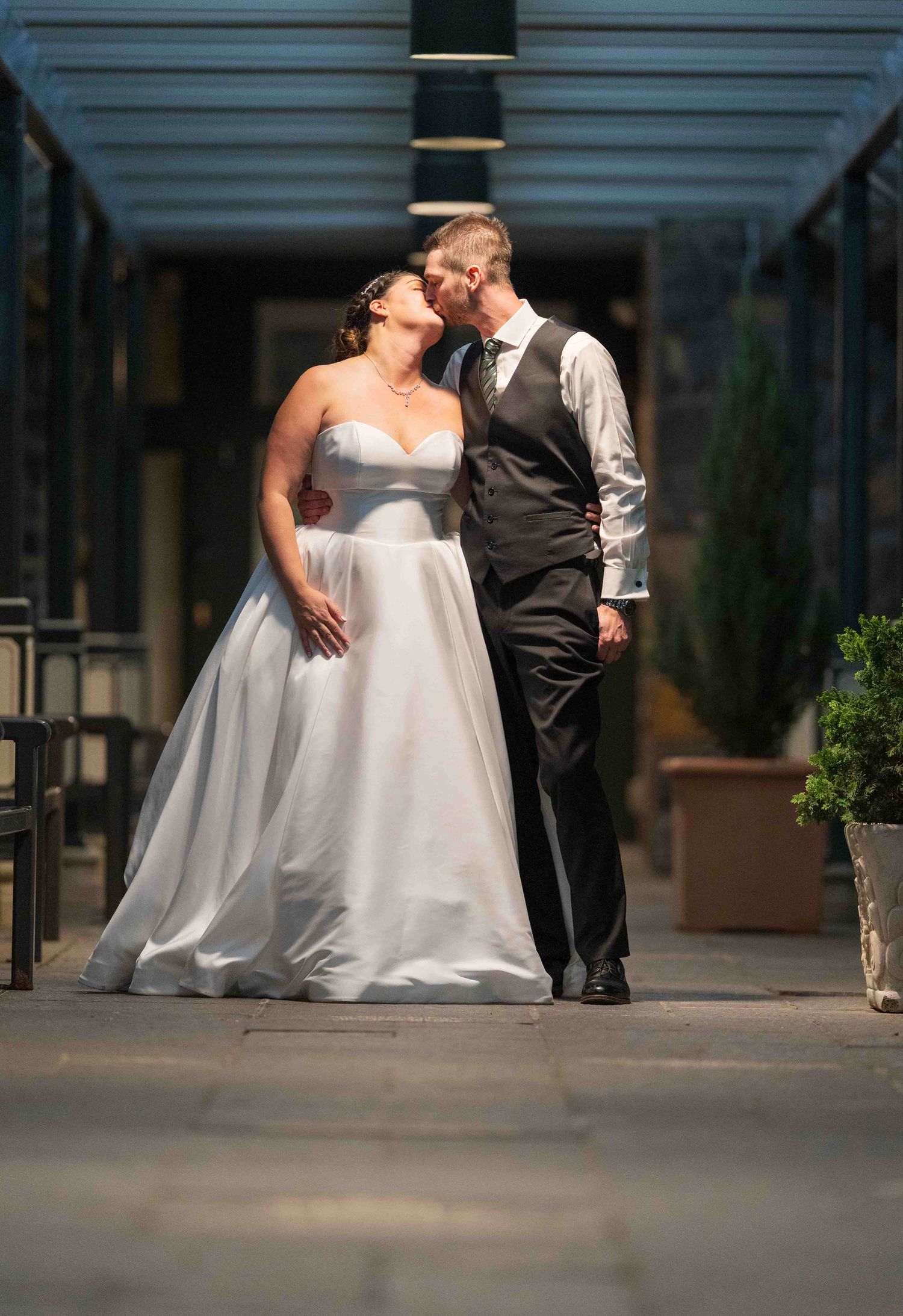
It resolves fine detail effortlessly whether it's eyelashes, fabric texture, or specks of glitter floating through the air. Even compared to the Sony 300mm f/2.8 GM (a lens I deeply admire), the Sigma 200mm f/2 competes or exceeds it. No softness. No haze. Just pure detail. This is where the real magic happens. The bokeh falloff is cinematic, transitioning smoothly from razor-sharp subject to ethereal background. It’s not nervous, not busy, not distracting — it’s beautifully controlled. The longer focal length adds significant compression. Faces flatten slightly in the most flattering way. Background elements grow larger behind your subject, creating drama and depth. Whether you're taking tight headshots, full-body portraits, or environmental scenes where your subject stands far into the background, this lens delivers a signature look that's unmistakably its own. It doesn't just blur the background, it sculpts it. This lens doesn’t need “fixing” in post. It gives you images that look polished straight out of camera.

Autofocus & Image Stabilization: Surprisingly Excellent
A lens can be optically perfect, but if the autofocus misses? It becomes a paperweight. Thankfully, Sigma nailed it.
While I haven’t shot official sports with it yet, I’ve tested it heavily with moving subjects. In video work, the autofocus impressed me even more. One client asked for a shot where they blew glitter off a cake toward the camera. Glitter is a nightmare for autofocus — tiny reflective particles flying everywhere, crossing the subject’s face, confusing tracking systems.
Yet the Sigma never lost the face, not for a second. Sigma claims up to 6.5 stops of stabilization. While I haven’t done formal chart tests, here’s what matters I can handhold this lens at slower shutter speeds and still get sharp images. For video, handheld is absolutely usable especially if you're careful. The stabilization modes are straightforward. Mode 1 is general purpose, and mode 2 is for panning. Even though I haven't tried panning yet, but mode 1 alone has been a lifesaver.


Real World Use: People Notice this lens
Every time I bring it to a session clients look at it, then look at me, then immediately know they’re about to get something special. There’s psychological value there. When your lens looks like a piece of cinematic artillery, the client feels like they’re in the hands of a pro. And when they see the images…? Their jaws drop.
The Sigma 200mm f/2
- Makes ordinary locations look premium
- Turns boring backdrops into dreamy canvases
- Adds uniqueness without relying on props or gimmicks
Whenever I teach workshops, I tell photographers “A lens that teaches you something is worth more than a lens that just gets the job done.” And the Sigma 200mm f/2 teaches you to:
- Think differently about distance
- Craft your compositions intentionally
- Use compression as an active tool
- Embrace foreground and background separation
- Slow down and make deliberate artistic choices
In many ways, this lens brings you back to the heart of photography — where you’re not just taking images, you’re creating them.

Who is the Sigma 200mm f/2 for?
I say this with love, this lens is not for beginners building their first kit. If you’re still putting together your essentials, pick up these lenses first:
- 24-70mm
- 70-200mm
- 35mm
- 85mm
Those lenses teach fundamentals and cover every job you’ll encounter. But if your kit is complete… If you’re craving something special… Something that makes you feel like an artist again…Then the Sigma 200mm f/2 is worth every penny! If you love primes, even more so. I personally dislike zooms my wife adores her 70-200mm f/2.8, but I avoid it at all costs. I like discipline. I like commitment. I like the creative constraints that primes impose.
The Sigma 200mm f/2 is a specialist tool — expensive at $3299 USD and heavy enough to remind you of its presence.
But the images? They make the weight irrelevant.
This is the lens you buy when:
- You want a signature look
- You want portraits that stop people mid-scroll
- You want power, presence, and artistry in a single tool
- You want a lens that challenges you and rewards you

So is the Sigma 200mm f/2 Fire?
Let’s settle this simply:
The Sigma 200mm f/2 is fire. Absolute fire. 🔥
It’s not perfect — no lens is — but the only real “cons” are:
- The price: $3299
- The weight: ~4 lbs
But you get used to the weight, and the price reflects the niche, extreme engineering of this optical masterpiece.
If you shoot:
- Portraits
- Creative lifestyle
- Weddings
- Seniors
- Environmental portraits
- Fashion
- Video with shallow DOF
- Anything where your subject needs to pop off the background…this lens will blow you away.
This is one of those rare lenses that makes you fall in love with photography again. It’s the kind of lens that reminds you why you picked up a camera in the first place. It inspires you. It pushes you. It rewards you.
And in a world where photography gear sometimes feels like endless incremental upgrades…
The Sigma 200mm f/2 is a bold, beautiful, game-changing leap
Until next time,
Shutter & Snap Photography


















Sigma 200mm f/2 | Shutter & Snap Photography